
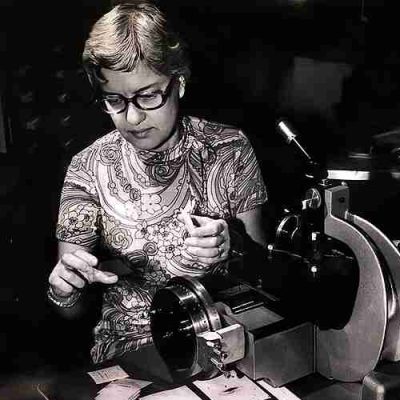
LSST Discovery Alliance with NVIDIA, launches a new fellowship pairing a postdoctoral scientist with dedicated GPU infrastructure to pioneer AI/ML analysis of Rubin Observatory’s LSST data. This will be a new two-year postdoctoral award designed to accelerate the use of artificial intelligence and machine learning in the analysis of data from the NSF-DOE Vera C. Rubin Observatory’s Legacy Survey of Space and Time (LSST).
The Fellowship is made possible through the generosity of NVIDIA, which is funding the award and providing the Fellow with dedicated compute resources and access to NVIDIA’s training programs. It honors the legacy of Dr. Vera C. Rubin, whose observational work provided some of the first strong evidence for dark matter, by supporting a scientist positioned to push the boundaries of what AI-driven discovery can do with Rubin’s data.
A Fellowship Built Around Compute
What sets this Fellowship apart is the infrastructure behind it. The selected Fellow will receive guaranteed access — up to 20% reserved time — on a dedicated NVIDIA DGX H200 8-GPU server, hosted at the SLAC Shared Science Data Facility (S3DF) alongside Rubin Observatory’s US Data Facility. Additional compute can be requested through the Rubin Observatory Resource Allocation Committee, giving the Fellow room to scale their research as it develops.
Alongside the hardware, the Fellow will have full access to the NVIDIA Training Program, including instructor-led workshops and up to 100 self-paced NVIDIA Deep Learning Institute course enrollments — resources aimed at deepening technical fluency in AI/ML methods as they apply to astronomical big data.
The award itself provides a $80,000 annual stipend, full health insurance and benefits at the host institution’s standard postdoctoral rate, and a $12,000 annual research and travel allowance for conferences, publications, and computing supplies, over a two-year term.
Who Should Apply
The Fellowship is open to scientists who have earned, or will earn, their Ph.D. between January 1, 2019, and August 2027, in astronomy, physics, data science, or a related field. It is open to English-speaking applicants of all nationalities, and women and members of underrepresented groups are strongly encouraged to apply.
Applicants choose their own host institution, provided a faculty or scientific staff member agrees in writing to serve as mentor, and the institution can accept the award without charging indirect costs. Above all, proposed research must connect directly to Rubin’s LSST dataset and make substantial, well-justified use of the NVIDIA GPU allocation at SLAC.
Applications will be accepted from September 15- November 2, 2026
For more information and application portal please click here.
Questions about the application process can be directed to Ana Gabela at [email protected].